Ao contrário do que sucedeu na campanha eleitoral americana de 2008, em que tanto Barack Obama como John McCain elegeram a questão das Alterações Climáticas uma prioridade nacional, o assunto praticamente se eclipsou do debate, na corrida à Casa Branca em 2012. Em nenhum dos três frente-a-frente televisivos entre Obama e Romney a questão foi aflorada, não obstante as pesquisas indicarem que essa é uma preocupação cara aos eleitores.
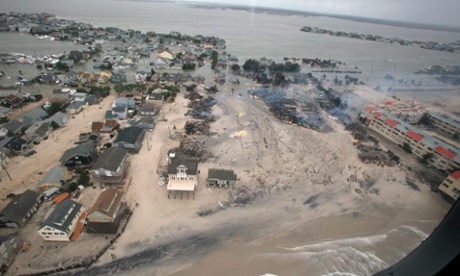
Por ironia, a questão mais silenciada pelos dois candidatos ao longo da campanha, acabou por dominar as atenções, nos EUA e no Mundo, justamente na recta final da disputa eleitoral, por conta da passagem trágica do furacão Sandy pelo país e pelas Caraíbas. A posição de ambos sobre o assunto transformou-se, aliás, num elemento determinante, confessado por muitos eleitores para decidir o voto. Depois de meses a ignorarem a matéria, Obama e Romney foram surpreendidos pela situação e, ao arrepio do que tinham nos planos, viram-se forçados a dar o tudo por tudo com a matéria no comando das acções eleitorais.
A marcha à ré no debate e na acção, todavia, não é de agora e acentua-se desde que a 'agenda verde' de Obama esbarrou nos primeiros obstáculos, logo no início do seu primeiro mandato. Mais: o fervor de consciência ambiental, que Al Gore (Prémio Nobel, dois óscares com "Uma Verdade Inconveniente") teve a capacidade de colocar no topo das urgências mundiais, foi-se diluindo e cedendo à contra-campanha organizada por aqueles que veêm na responsabilização da acção humana sobre a Natureza o obstáculo a uma exploração económica que querem livre e desregulada. Aproveitando o cenário de recessão mundial, cavalgaram a onda da crise financeira e acenaram com o fantasma do desemprego, associaram a defesa do clima a uma perda generalizada de postos de trabalho, capitalizaram o pavor social e foram neutralizando as demandas globais de intervenção em favor do Planeta.
A demissão e o impasse gerado pelos EUA face ao Protocolo de Kyoto, a sua sistemática recusa num acordo de redução nas emissões de carbono e, por fim, a ausência da Cimeira Rio+20, são apenas os ganchos mais flagrantes do abandono da agenda climática tão obstinadamente defendida por Obama até à eleição de 2008.
A reportagem em baixo ajuda a perceber os tentáculos que minaram a agenda climática nos EUA, pervertendo o debate, mais pela combinação de interesses de circunstância do que através de objecção com fundamento científico, culminando num processo contaminação da opinião, de contornos no mínimo escusos, que atende pelo nome de 'Climategate'.
Seguem dois artigos de
Coral Davenport, correspondente do
The National Jornal para as questões da energia e do ambiente: um, publicado no final de Outubro, sobre o silêncio de Obama a respeito da matéria, durante a campanha eleitoral; outro, publicado em Setembro, à data da Convenção Nacional do Partido Republicano, no âmbito das referências críticas e irónicas que o tema das Alterações Climáticas mereceu no discurso de Mitt Romney. Numa dessas intervenções, Romney arrancou gargalhadas à plateia, contrapondo:
”President Obama promised to begin to slow the rise of the oceans. And to heal the planet. My promise is to help you and your family.”
As declarações valeram-lhe a simpatia da ala céptica da sociedade americana, que despreza as preocupações ambientais, mas a vantagem eleitoral que aparentemente renderam acabaram por se voltar contra Romney ainda antes das urnas. A calamidade provocada pelo furacão Sandy recolocou as preocupações climáticas no topo das prioridades dos eleitores. Confrontado com os efeitos reais do problema, o candidato foi obrigado a engolir o desdém de que se vangloriara um mês antes.
A incongruência - entre a ausência de discurso político, o interesse manifesto dos cidadãos e as evidências incontornáveis da realidade - que o Sandy veio expor é de tal forma flagrante que os EUA discutem agora, a poucos dias da eleição, a forma a vitória de um ou outro candidato se pode vir a decidir em torno de uma política para as Alterações Climáticas.
A este respeito, e a par com os dois artigos referidos, vale ainda ler uma entrevista de Coral Davenport ao "Frontline", da
PBS, onde ela analisa a inversão abissal do Congresso sobre o assunto e explica que opções políticas ainda estão sobre a mesa, para aqueles que defendem a necessidade de acção urgente neste domínio.
[ENTREVISTA]
In 2008, Obama campaigned pretty actively around the issue of climate change, proposing a cap-and-trade system that would put a ceiling on carbon dioxide emissions. What’s behind his quieter stance this election?
… In this campaign, the public perception has shifted so much. The Republican Party has shifted so far to the right that it has denied the science at all.
Another reason is the biggest issue in this campaign: the economy and jobs. Republicans have sold climate regulation as something that will hurt jobs, that it will probably increase the price of fossil fuels. So within the Obama campaign there’s a sense that [this is a losing battle].
[Obama] campaigned on this aggressive, detailed [cap-and-trade] plan, and they torpedoed it. It passed the House, just barely, and died in the Senate. And in the midterm elections, Republicans campaigned on cap-and-trade to the point where it became politically toxic. …
Part of Obama’s campaign promise was to pass cap-and-trade and use that money for the government to invest heavily in clean energy research; $150 billion was his campaign pledge.
What ended up happening was that in 2009, soon after Obama was elected, Congress passed the stimulus, with $50 billion … to invest in clean energy. The first big solar company to get funds was Solyndra, which later went bankrupt. And so this campaign promise of clean energy spending became politically toxic, it became something [used] to attack the idea of clean energy spending.
Democrats who had supported cap-and-trade retreated. It became fodder for campaign ads. It was portrayed as an energy tax that would hurt the economy. And then a lot of Democrats who supported cap-and-trade ending up losing their jobs [in the midterm elections].
So if cap-and-trade is no longer an option, what options does Obama have to address climate change if he’s re-elected?
He doesn’t have a lot of options. He cannot go back to cap-and-trade; that has no chance of passing.
One thing he could and probably will do is use the EPA [Environmental Protection Agency] to roll out new rules limiting coal-fired power plants that would require coal plants to rein in their pollution of C02 emissions.
It’s very unpopular. He’d probably not want to talk about this on the campaign trail because it could lead to the closure of coal plants in Ohio, Virginia, Colorado and Pennsylvania — all swing states. …
What are the chances Congress would take up the issue, and in what way?
Cap-and-trade is dead, but there is one policy that does have some bipartisan support. It’s kind of a long shot, but it’s a carbon tax. Economists say the most effective way to address the issue is to put a tax on greenhouse emissions. Republicans like the idea in exchange for an end to other taxes they don’t like.
In the next year, Congress is expected to take up a sweeping tax code reform to clean up the tax code and help the federal deficit. So a lot of old tax policies will be on the table.
So if they frame this as not an environmental issue, but as a good tax policy, as part of the mix, as good fiscal policy, that could be one opening in the next year or so that would be tremendous environmental policy that economists say would be the most effective.
What’s Mitt Romney’s campaign stance on climate change?
… Mitt Romney has had several positions on this issue. As a governor, he pushed climate change policies, pushed his government on the issue, promised to close coal plants. In his book, he said he supports this idea of this carbon tax, like McCain.
But when he started running in the Republican primary this year, where he was attacked by those on the right, like Perry, who denied climate change, [Romney] also went to the right and walked back his former views. He’s indicated he’s not sure what causes climate change. In this speech at Republican National Convention,
he mocked the issue, telling the crowd: ”President Obama promised to begin to slow the rise of the oceans. And to heal the planet. My promise is to help you and your family.” That was a laugh line.
In Congress, who’s leading on climate change issues? Who isn’t doing anything?
In the Republican-majority House, the chairman of the Energy and Commerce Committee, Fred Upton, is now supposed to undercut climate change, undercut EPA regulations, which is an awkward position for him because for most of his career, he was a real moderate on this issue. He used to say it was a problem. He sponsored legislation to mandate energy-efficient light bulbs with lower emissions.
Within the House, the other big leaders are Darrell Issa, chairman of the House Oversight and Government Reform Committee, charged with leading investigations into the executive branch. He’s made this a big issue. [Congressman] Joe Barton, a Republican from Texas, is known as one of the biggest skeptics. And in the Senate, Jim Inhofe (R-Okla.). They used to be out in the cold. …
As for leaders on the left pushing for change, there’s Henry Waxman (D-Calif.), the ranking Democrat on the House Energy and Commerce Committee, and he was the leading sponsor of House cap-and-trade bill that passed, and which led to a lot of his Democratic colleagues losing their jobs [in the 2010 midterm elections]. He’s the stalwart environmentalist not backing down.
Among Republicans, is there anyone pushing to address climate change?
Outside of Congress, there are a lot of Republicans who are very concerned in the way their party talks about climate change. They’re afraid the Republicans will end up on the wrong side of history, and this view will come back and hurt them badly. So they’re outside the political process having conversations on how to push the issue.
The Energy and Enterprise Initiative is made up of
Bob Inglis of South Carolina, who lost his job in part for support of climate change and is working with conservative economist Art Laffer, with the support of Romney adviser Greg Mankiw
to push for this idea of the carbon tax.
There is also the Young Conservatives for Energy Reform, a Christian Coalition linked up with [Young Republicans], that fears that the party is morally on the wrong side of the issue.
So there’s a growing conversation of Republicans who aren’t in public office, who are worried, who want to tell Republicans that if they go back to a moderate place on this issue, we will still support them.
But a much more powerful voice is fossil fuel groups and SuperPACs. They haven’t had nearly as much of a voice as the SuperPACs, like Americans for Prosperity, or the coal groups, like the American Coalition for Clean Coal and Electricity, which are spending very heavily to influence the campaign and make sure Republican candidates don’t move on the issue.
Are there economic costs to not addressing the issue? What are the costs for American taxpayers?
The economic costs are adding up. One thing scientists say is that we’re already starting to see increased floods, and so there are increased insurance rates in areas where there are more floods, stronger hurricanes or increased drought.
We had record drought this year, which sent up food prices. So climate change is already starting to have an impact on bottom lines. Former Republican Senator Richard Lugar of Indiana, who lost his Republican primary, said that even if Republicans aren’t going to come to the table [on the issue of climate change], they better be prepared to pay for the results of it, the taxpayer damage. This is going to keep coming and driving up costs. …
How much do voters care about the issue?
It’s interesting because a couple of years ago we saw polls showing that fewer and fewer people were convinced by climate science or believed in climate change.
Now we have extreme droughts, record weather damage, on the taxpayer’s dime, and we’re starting see voters change. [
A Pew study released last week] showed that in the last year, an increasing number of Americans say the earth has been getting warmer over the last few decades and that the rise in the earth’s temperature is mostly because of human activity.
This is an issue for independent voters who say that where a candidate stands on climate change change can influence their vote, and they want to see a candidate who will do something on climate change. So that’s a new dynamic that we’re starting in the hump stretch of this election season. Part of it has to do with the extreme weather of this summer, when we saw food prices go up. Extreme drought is something that can be directly tied to climate change. Voters tend to respond to dynamics that are most directly affecting them. It’s fresh in voters’ minds.
e ainda:
Outros documentários:
The president is finally talking about global warming again, but his best chance of actually doing something about it may come if he keeps quiet.
Climate change is slowly returning to the campaign conversation. After essentially ignoring the issue all year, President Obama has finally begun to explicitly address the dangers of fossil-fuel emissions warming the atmosphere, a phenomenon that an overwhelming majority of scientists agree will have grave consequences—some of which are already evident in the form of extreme droughts, increased flooding, and more-devastating storms. At an Oct. 11 rally in Miami, Obama said, “And, by the way, my plan will reduce the climate pollution that’s heating our planet. Because climate change is not a hoax … it’s a threat to our children’s future.”